Sterility-Aware Robot Learning
An NIH R21 proposal to learn clinical sterility constraints from 380 expert nurse demonstration videos — then use them to guide real-time robot execution at the bedside.
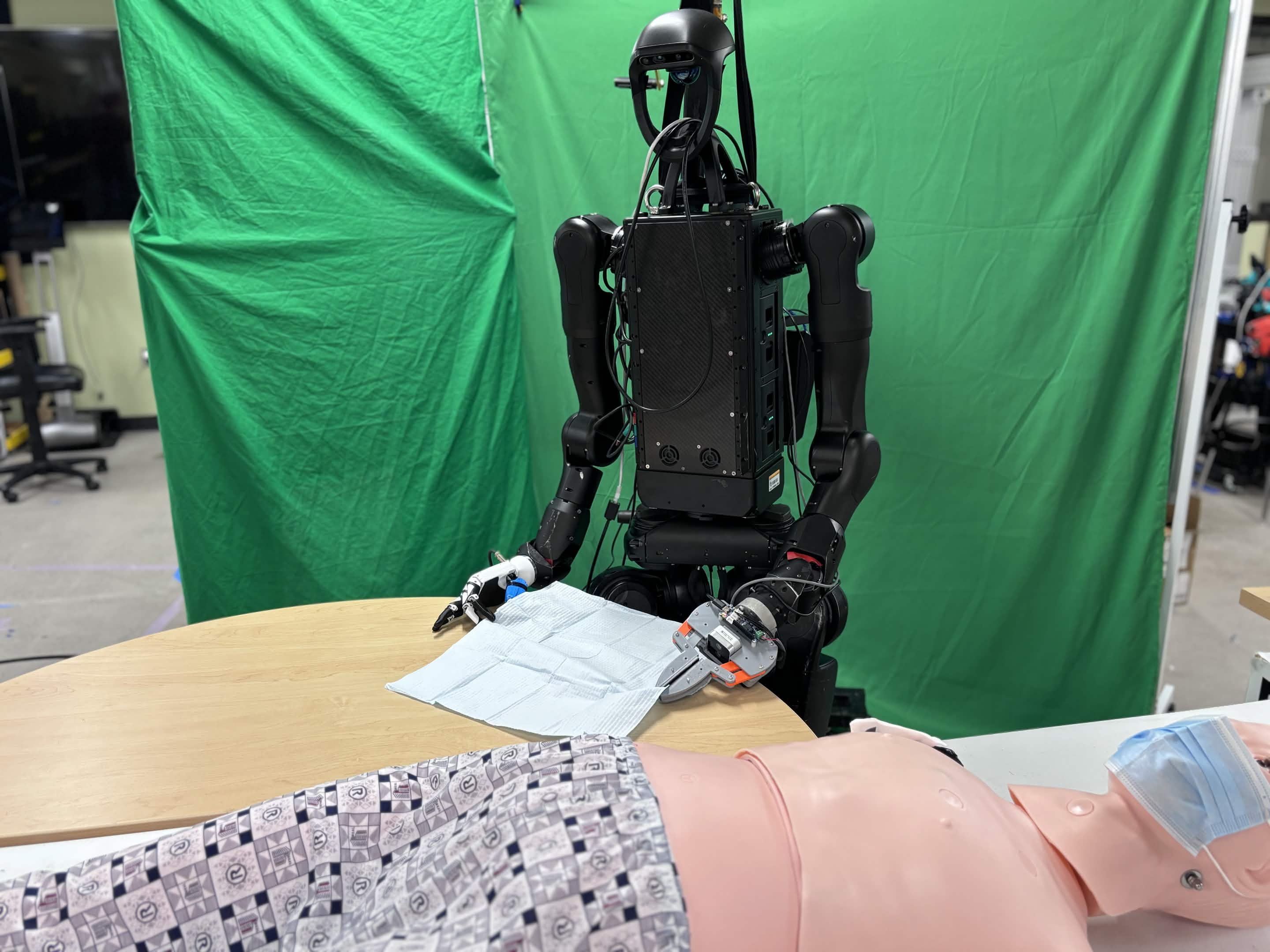
Completing the task isn't enough
A robot that finishes a bedside procedure but breaks sterile technique doesn't just fail — it raises the patient's infection risk.
- Existing robot learning pipelines treat sterility as an afterthought, hand-engineered after the fact.
- This proposal asks whether sterility constraints can be learned from expert nurse demonstrations and enforced during execution.
Research Approach
Three interconnected components, from video to enforced motion.
Perception
Learn sterility-relevant features — object positions, contamination zones, safe handling regions — from annotated nurse demonstration videos.
Constraint Models
Train continuous models on those features to score any robot configuration as admissible or at risk.
Constrained Execution
Integrate the learned constraints into the motion planner, so sterile technique is enforced in real time during physical execution.
My Role
I'm contributing the tactile sensing layer — safe clinical grasping requires the robot to feel, not just position.
- Contact and proximity feedback at the end-effector, for compliant grasps that don't break the sterile field.
- Supporting data collection and robot integration.
- The specific sensing implementation is still being determined.